GSEA Explained: The One "Teen" Competition That's Actually Only for College Founders
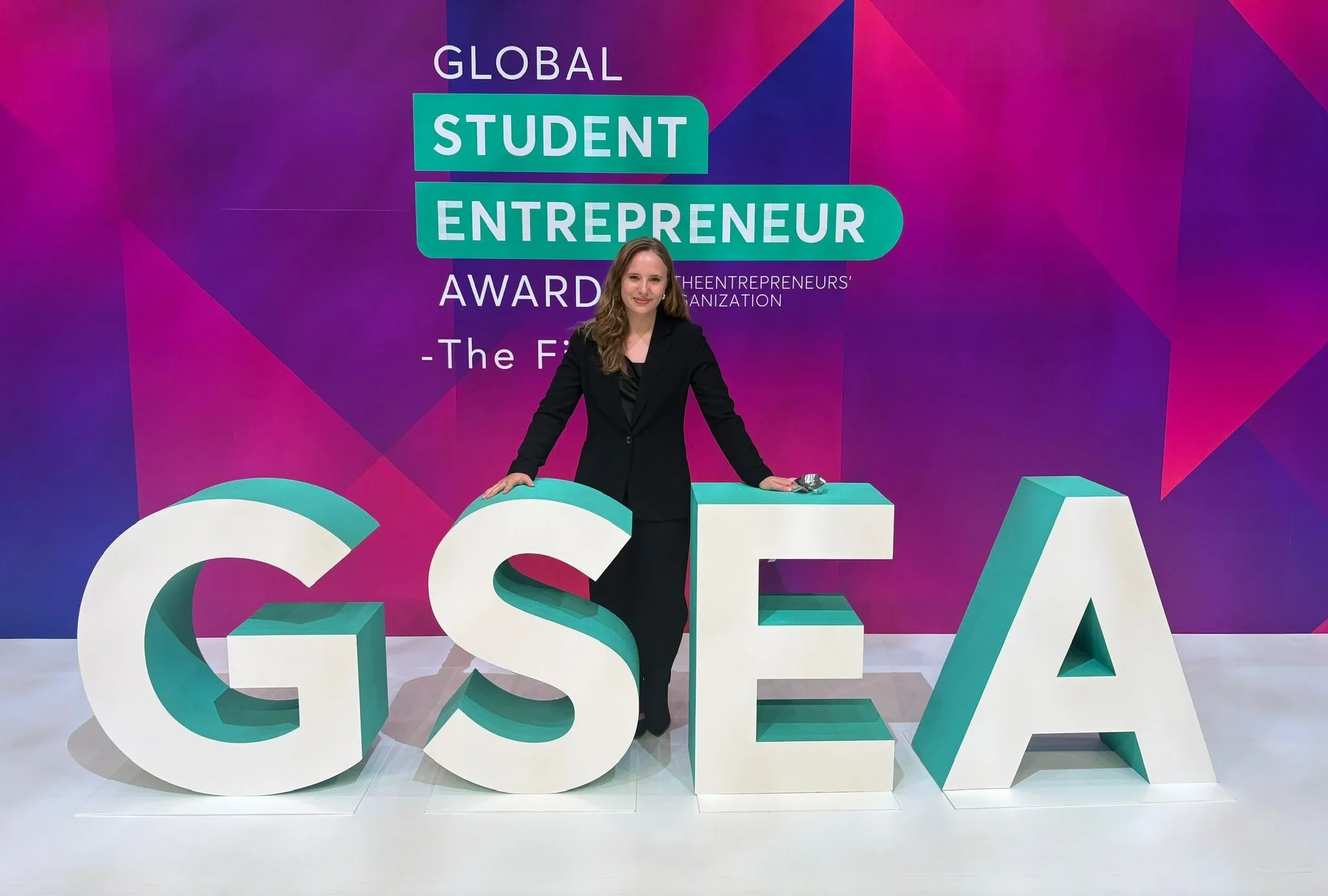
Key Takeaways
GSEA (the Global Student Entrepreneur Awards) is not a competition for high schoolers, despite showing up constantly on "top business competitions for teens" lists
To actually qualify, a student must be enrolled in college or university and already own and operate a real business that's been running for at least 6 months with $500+ in revenue (or $1,000+ raised)
The realistic age range is roughly 18 to 30 — a motivated 15-year-old with a brilliant idea still cannot enter, no matter how good that idea is
The prize pool is real and substantial: a $100,000 global pool, with $50,000 for first place alone
If your teen doesn't qualify yet, that's not a dead end — it's a roadmap. GSEA can become a genuine, realistic goal a few years from now, once there's an actual business behind it
Here's a specific kind of disappointment a lot of parents run into. You find a list of "top business competitions for teens," GSEA is sitting right there next to Diamond Challenge and Blue Ocean, the prize pool reads $100,000, and for a second you let yourself picture your 15-year-old on that stage. Then you keep reading the eligibility section, and your stomach sinks a little: must be enrolled in college or university. Must own an operating business generating at least $500 in revenue. Your teen isn't eligible. Not this year, not next year — not until they're actually in college and actually running something real.
If that's where you've landed, take a breath — you didn't miss anything, and your teen hasn't fallen behind. The lists are the problem, not your research. Let's clear up exactly what GSEA is, why it keeps getting lumped in with competitions your teen genuinely can enter right now, and what to actually point them toward instead.
What GSEA Actually Is
GSEA is run by the Entrepreneurs' Organisation (EO), a global business network of more than 13,000 established entrepreneurs across 160-plus chapters worldwide. It isn't a "pitch your idea and see what happens" competition. It's specifically built to find and recognize students who are already running a real business while attending college — people who are, right now, juggling midterms and payroll at the same time. Competitors work their way up through local EO chapter competitions, then regional or national rounds, before the strongest advance to the GSEA Global Finals. More than 1,700 students from upwards of 30 countries compete in a typical year, which should tell you something about how seriously this is taken in the entrepreneurship world — it's a genuinely prestigious program. It's just not aimed at your teen yet.
The Eligibility Requirements, In Plain English
Here's what GSEA actually asks of an applicant, stripped of the formal language:
You need to be enrolled as an undergraduate or graduate student at the time you apply — full-time or part-time both count, but you need to currently be in school. You need to be the owner, founder, or controlling shareholder of the business you're entering; each company can only be represented by one student. That business needs to have been operating continuously for at least six months before you apply — not an idea, not a prototype, an actual running business. And it needs to show it's real in a measurable way: at least $500 in revenue generated, or at least $1,000 raised in outside investment. There's also an age cap around 30, and you can't apply if you've already been a top finalist in a previous year.
Read that list again, and the pattern is obvious: nothing in it is about how good an idea is. Everything in it is about proof that a real business already exists. That's an entirely different question than the one Diamond Challenge or Blue Ocean ask, and it's worth sitting with that difference for a second, because it explains almost everything about why GSEA feels so out of reach for a high schooler — not because your teen isn't capable, but because the entire competition is built around a stage of life they haven't reached yet.
Why GSEA Keeps Showing Up on Teen Competition Lists Anyway
This part is worth saying plainly, because it's not your imagination and it's not a failure of research on your part: GSEA genuinely does get miscategorized, constantly, across dozens of "competitions for students" roundup articles. Part of the reason is right there in the name. "Global Student Entrepreneur Awards" technically means college student — it always has — but the word "student" on its own doesn't carry that distinction to someone skimming a list, and a lot of these roundups are compiled by people casting a wide net for anything with "student" or "youth" in the title, without reading past the headline into the fine print. GSEA is also genuinely famous within entrepreneurship circles, which makes it an attractive, prestige-signaling name to drop into a list — even when the list itself never specifies that "student" here means someone already enrolled in a degree program and already running a company. You did nothing wrong getting excited about it. The listing was just imprecise.
What the Prize Actually Looks Like (Worth Knowing, Even If It's Not Yet)
For context on just how real this program is: the GSEA Global Finals carry a combined prize pool of $100,000, with $50,000 going to the first-place winner, $25,000 for second, and $15,000 for third. Beyond the headline cash prizes, additional recognition is given for categories like Social Impact and Innovation, and winners walk away with mentorship, donated business services, and access to EO's entrepreneur network — the kind of resources that matter enormously to someone who already has a company to grow. None of that is hypothetical or exaggerated. It's simply a prize built for a very different stage of the journey than the one your teen is on today.
So What Should Your Teen Actually Aim For Right Now?
Here's the genuinely good news in all of this: not qualifying for GSEA at 15 isn't a gap your teen needs to close. It's just where they are, and it's exactly where they're supposed to be. The competitions built for this age and stage — Diamond Challenge, Blue Ocean, the Harvard Crimson Business Competition — exist precisely because a 15-year-old shouldn't be expected to already be running a revenue-generating company. They're judged on the idea, the thinking, and the pitch, not on whether a business is already operating, because at this stage, the idea and the thinking are exactly what's being developed.
And here's the part worth sitting with for a moment: a few serious years spent building and refining real ventures through those age-appropriate competitions — getting feedback, losing some rounds, getting better, trying again the next year — is precisely the kind of experience that turns into an actual, operating business once college arrives. Which is the exact moment GSEA stops being a list item that doesn't apply and starts being a realistic, legitimate goal. Nothing here is a closed door. It's just a door further down the hallway, and the work your teen does right now is what gets them to it.
Frequently Asked Questions
Is there any way for a high schooler to qualify for GSEA?
In practice, no — GSEA's enrolment requirement and operating-business requirement are both built around the college experience, and both must be met at the same time, so even an unusually accomplished high schooler running a real business typically won't meet the enrolment condition yet.
What exactly counts as an "operating business" for GSEA eligibility?
A business that's been running continuously for at least six months and has either generated a minimum of $500 in revenue or received at least $1,000 in outside investment — a real, functioning operation, not a business plan, prototype, or idea still in development.
Why does a competition called "Student" Entrepreneur Awards exclude most students?
Because "student" here has always specifically meant a college or university student — the name reflects GSEA's original, narrower focus on entrepreneurs balancing a real business with a degree program, even though generic competition lists rarely make that distinction clear.
If my teen can't enter GSEA now, is there something comparable they can enter today?
Yes — Diamond Challenge and Blue Ocean Competition are both built for exactly this age group and evaluate a concept and pitch rather than an already-operating business, making them the realistic, age-appropriate starting point GSEA simply isn't yet.
If your teen is building toward a future where GSEA genuinely fits, IFA's championship prep pathway is where that journey actually starts — with the age-appropriate competitions built for exactly where they are right now.
This article reflects publicly available information about GSEA's eligibility requirements and prize structure as of 2026. Rules, prize amounts, and regional variations can change — confirm current details directly with the Entrepreneurs' Organization or your local EO chapter. IFA is not affiliated with GSEA or the Entrepreneurs' Organization.