Global Youth Entrepreneurship Challenge (GYEC) 2026: The Ultimate Guide for Young Innovators
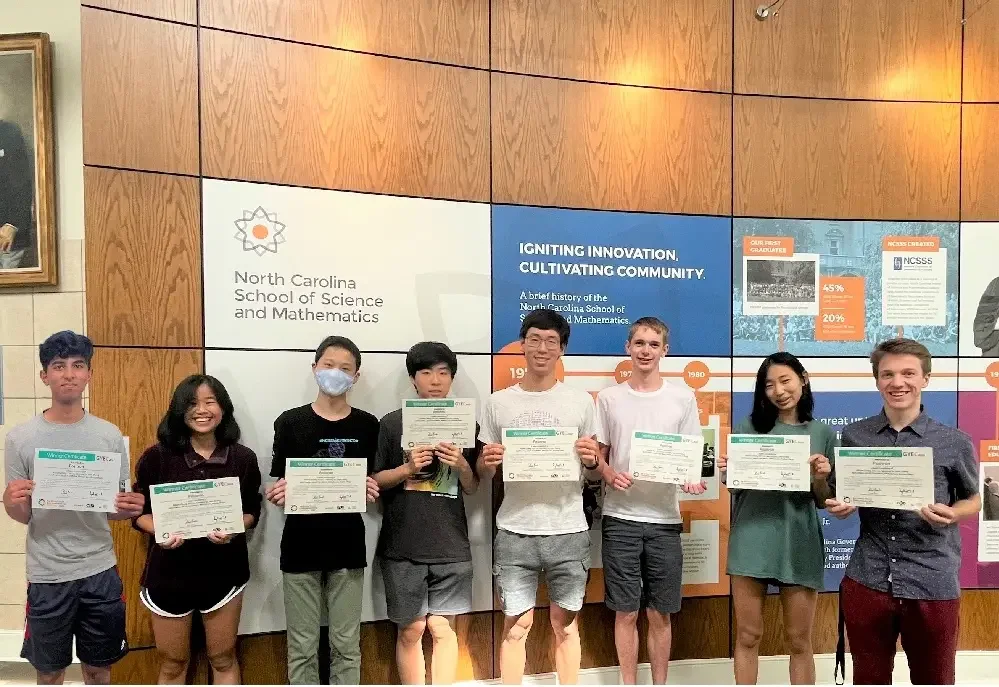
In a world that values innovation and adaptability more than ever, the Global Youth Entrepreneurship Challenge (GYEC) has emerged as one of the most dynamic and accessible competitions for young innovators worldwide. Unlike traditional business plan contests, GYEC thrusts students into a fast-paced, solution-driven environment where creativity, critical thinking and teamwork rule the day.
This blog offers a definitive look at GYEC 2026 — what it is, how it works, why it matters, and how students can strategically prepare to compete. Whether you’re a parent looking for enriching opportunities for your teen, a student eager to test your ideas or an educator seeking practical challenges, this guide will give you clarity and confidence.
What Is the Global Youth Entrepreneurship Challenge (GYEC)?
The Global Youth Entrepreneurship Challenge (GYEC) is an intense, collaborative innovation marathon where student teams receive a surprise business or social challenge and have a limited timeframe — typically around 24 hours — to design a compelling solution, build a concise pitch, and present it to a panel of judges. The competition is designed to simulate real startup environments where speed, clarity and creativity are essential.
GYEC is not just about winning a prize — it’s about honing skills that matter in the real world: rapid ideation, strategic thinking, resilience under pressure, teamwork, and persuasive communication.
Why GYEC Matters in 2026
In 2026, professional success will depend less on memorising information and more on applying insights quickly and effectively. GYEC cultivates a skillset that aligns with future-ready competencies:
Rapid problem solving
Entrepreneurial thinking
Adaptive team collaboration
Effective time management
Concise communication
These are precisely the skills top universities and employers value — and they are tough to build through traditional classroom learning alone.
Unlike competitions where participants prepare lengthy plans over months, GYEC simulates real startup challenges, pushing participants to think clearly and act swiftly.
How the GYEC Format Works
While details may evolve year to year, the core GYEC structure generally includes:
1. Challenge Reveal
Teams are presented with a real-world problem at the start of the competition window. It may focus on business innovation, social impact, sustainability, digital solutions or hybrid scenarios.
2. Ideation Sprint
Teams rapidly brainstorm multiple solutions, evaluate feasibility, and select the best option based on clarity, impact, and simplicity.
3. Solution Development
In the core of the time-boxed period (often 24 hours), teams refine their idea, build a mock prototype or framework, conduct quick research and prepare pitch material.
4. Final Submission
This usually comprises:
A concise written summary (1–2 pages)
A pitch deck (5–10 slides)
A short video presentation or live pitch
5. Evaluation
Judges review submissions on predefined criteria like:
Problem understanding
Solution innovation
Feasibility
Impact potential
Presentation clarity
Every round — and often every second within the sprint — is designed to accelerate learning.
Who Can Participate?
GYEC invites students from around the world — typically ages 13–25 — providing a unique opportunity for high-schoolers, college students and young entrepreneurs to interface with peers at peak creative energy. Teams are often cross-disciplinary, combining talents in business, tech, design and social sciences.
Typical Timeline for GYEC 2026
The precise schedule can vary, but a typical GYEC cycle looks like:
Registration Opens: Early 2026
Challenge Days: Spring / Summer windows (specific dates published yearly)
Submission Deadlines: Same or immediately following challenge day(s)
Results: Shortly after submissions
Due to the rapid nature of the event, participants need to plan ahead — ensuring they are ready with teams, tools, and time reserved.
Core Skills Built by GYEC
The competitive structure of GYEC accelerates essential career and entrepreneurial competencies:
Rapid Ideation
Students learn to evaluate ideas quickly, distinguish promising directions from distractions, and pivot fast when necessary.
Focused Collaboration
Teams must coordinate in tight timeframes, which strengthens communication, delegation, and conflict management skills — vital for future careers.
Strategic Planning Under Pressure
Teams must balance speed with strategy, deciding when to iterate and when to finalise a pitch.
Concise Storytelling
Being able to tell a compelling story in a few slides or a short video is a career-defining skill in business, consulting, research and beyond.
Judging Criteria: What Separates Great from Good
While each year’s specifics can shift, common judging benchmarks include:
Clarity of Problem Definition: Did the team understand the challenge fully?
Relevance of the Solution: Does it address an authentic need?
Innovation & Originality: Is the solution distinct or breakthrough?
Feasibility & Practicality: Can the solution be realistically implemented?
Presentation Strength: Was the idea communicated clearly and persuasively?
Strong submissions often stand out not because they are perfect, but because they demonstrate deep understanding and creative application.
Examples of GYEC-Style Challenges (Hypothetical)
To illustrate how dynamic GYEC problems can be:
Example 1: Micro-Entrepreneurship for Local Commerce
Students are tasked with designing a low-cost digital platform that helps street vendors accept digital payments and attract customers via curated online marketplaces.
Example 2: Mental Wellness in Education
Teams develop a solution combining tech, community engagement and peer support models to improve teen mental wellbeing in under-resourced schools.
Example 3: Sustainable Supply Chain Solutions
Participants build a scalable framework for small manufacturers to track carbon emissions and access green supply chain incentives.
In each case, teams must think holistically — balancing innovation, real-world constraints, and clarity.
Benefits Beyond the Competition
Participating in GYEC equips students with a portfolio of real proof points:
1. Sharable Outputs
A concise pitch deck, a video summary or written analysis can be used in:
university applications
internships
scholarship essays
even initial startup decks
2. Enhanced Confidence
Completing a solution under tight timing builds resilience and self-efficacy — traits essential for both entrepreneurship and professional life.
3. Global Exposure
GYEC connects students with international peers, judges and mentors — expanding perspectives and networks that last beyond one event.
4. Practical Experience
Rather than hypothetical case studies, GYEC offers hands-on problem solving that mirrors real business and innovation cycles.
How Families and Educators Can Support Competitors
To help students maximise their GYEC experience:
Form balanced teams with diverse strengths.
Allocate focused time windows for ideation and preparation.
Encourage structured brainstorming rather than perfect ideas.
Practice rapid pitching before challenge day.
Celebrate the learning process as much as results.
This support is often the difference between performance and transformation.
How to Register and Get Support
Students can register here.
The Global Youth Entrepreneurship Challenge is more than a competition — it’s a growth accelerator. Students who embrace the fast-paced, creative environment of GYEC sharpen skills that will matter in university, careers and lifelong innovation.
If your student is ready to tackle real problems, think outside the box and compete globally — then GYEC 2026 is a launchpad worth exploring.