The 2026 Guide to Elite High School Business Competitions: Deadlines, Prizes, and Admission Impact
Key Takeaways
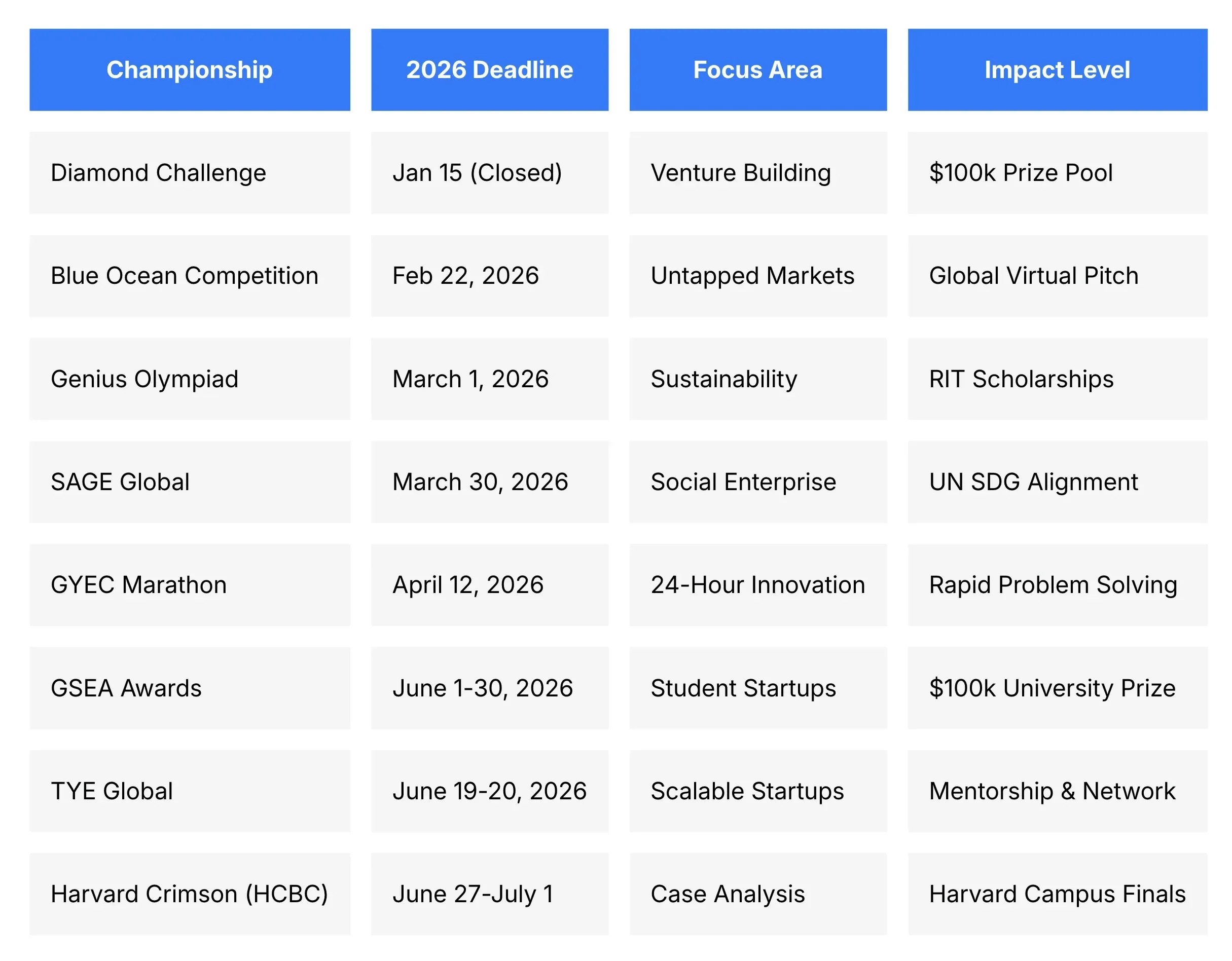
Upcoming Deadline: The Blue Ocean Competition closes on February 22, 2026; SAGE Global entries are due by March 30, 2026.
Admissions Shift: 2026 university trends prioritise "Impact Density"—quantifiable leadership results—over passive participation in clubs.
Literacy Gap: With only 18 hours of financial instruction provided in four years of high school, these global stages are the essential "practicum" for real-world wealth management.
Major Funding: Competitions like the Diamond Challenge and GSEA offer prize pools exceeding $100,000 for student-led ventures.
As of February 2026, the global education landscape has entered the "Reasoning Economy," where admissions officers and AI-augmented evaluation systems look for the "X-Factor." For parents of students aged 10-18, the most valuable differentiator is no longer just a title, but evidence of leadership under ambiguity. High-stakes championships allow students to prove they can manage $500,000 portfolios or pitch business models that solve community crises before they even graduate high school.
The 2026 Global Championship Calendar
IFA provides a direct bridge to these eight elite platforms. Use the table below to sync these high-impact deadlines with your 2026 calendar.
Deep Dive: 2026's Most Prestigious Opportunities
The Blue Ocean & Diamond Challenges: The "Junior MBA" Stage
The Blue Ocean Student Entrepreneur Competition is the largest virtual pitch contest globally. Participants must submit a 5-minute video identifying a new market space—a "Blue Ocean"—where competition is irrelevant. Similarly, the Diamond Challenge remains a top-tier choice for startup-minded teens, offering over $100,000 in prizes and the chance to present at the Limitless World Summit.
HCBC & Genius Olympiad: Prestige and Purpose
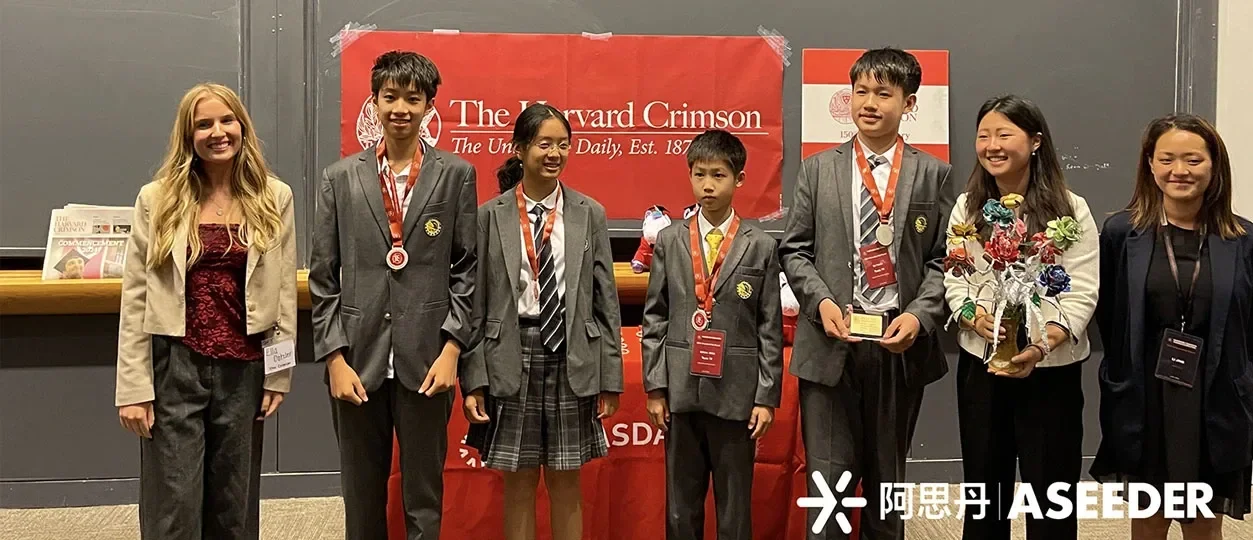
For those aiming for elite universities, the Harvard Crimson Business Competition (HCBC) offers the prestige of a Harvard-campus final and focuses on deep case-study analysis. Meanwhile, the Genius Olympiad (Rochester Institute of Technology) targets the intersection of STEM and business, rewarding innovators who address environmental sustainability with university scholarships.
SAGE Global & GYEC: Social Impact and Resilience
SAGE Global aligns directly with the UN Sustainable Development Goals, challenging teens to build social enterprises that solve local community issues. For those who thrive under pressure, the Global Youth Entrepreneurship Challenge (GYEC) is a 24-hour innovation marathon where teams develop a full business solution in one day, building the resilience that 72% of Gen Z adults say they lack in early adulthood.
The IFA Training Pathway
Success in these global arenas requires a structured, expert-led approach. Unlike generic tutoring, the IFA Training Pathway for championships is customized to each student's specific starting point.
Readiness Assessment: The journey begins with a live readiness interview. Following this, the academy provides a personalised report detailing the student's current level and specific training needs.
Program Selection: Based on the assessment, families select a preparation program that fits their child's goals and the specific competition format.
Structured Preparation: Training is broken into modular objectives:
Foundations & Frameworks: Establishing logic based on real-world briefs.
Business Modeling: Developing the financials and logic for a competitive pitch.
Pitch Design & Delivery: Polishing the slide deck and practicing a high-impact 5-minute delivery.
Mock Rounds: Conducting timed sessions that replicate real judges to provide immediate performance feedback.
This Outcome-Focused model ensures that every session has measurable goals, from business logic to verbal clarity.
Frequently Asked Questions (FAQ)
Can 11-year-olds participate in these events?
Yes. While some contests like GSEA are for university students, many of these championships, including SAGE Global and IFA’s training workshops, are accessible to middle schoolers (ages 10-13) to begin building their portfolios early.
Is there a cost to enter?
Many of the world's best competitions, such as the Blue Ocean Competition, are free to enter. Others may have regional or final round fees, which are often offset by major prize pools.
What is the math behind winning investments?
Competitive teams often use the Rule of 72 to explain wealth growth. To find how long it takes for a prize or investment to double, use the formula:
t ≈ 72/r
where t is time in years and r is the interest rate. Mastering these concepts early separates "Elite" performers from the 64% who only perceive they are financially literate.
This guide is updated for the 2026 competitive cycle. For personalised guidance, apply to championships at International Finance Academy.